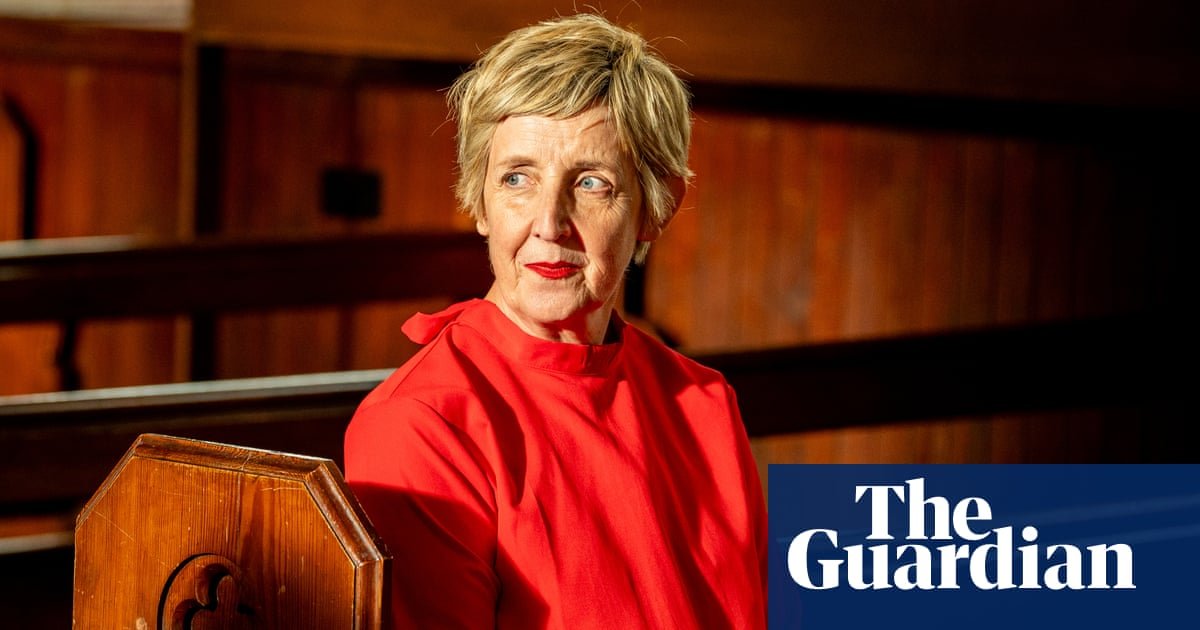
There has been “a loss of regional identity” in stories on stages across the UK due to the difficult circumstances theaters face, according to Julie Hesmondhalgh.
The actor, who last week was the fourth contestant to leave The Celebrity Traitors, noted that for financial reasons regional theaters are increasingly doing co-productions with other theaters. This can lead to a “generic” product, he said, rather than a show that specifically says something about the local area.
Hesmondhalgh highlighted the phenomenal impact of James Graham’s fista restorative justice drama, released at Nottingham Playhouse in 2024 and based on the true story of a one-punch death in the city. The game, which Hesmondhalgh brought an Olivier award for her portrayal of the victim’s mother, she went from Nottingham to the West End, a UK tour and Broadway. “A new work is always so hard to sell, but because it was a local story and by James Graham, it sold,” he said.
Asked whether programming had become risk-averse post-Covid, Hesmondhalgh said: “It’s really difficult for regional theatres. There’s room in my heart for musicals and for Noël Coward. There’s a familiarity with the old classics that people love. But the world of co-professionals is making things very difficult for people. To survive now as a regional theatre, you necessarily have to do so many co-productions with other regional theatres. There’s a definite loss of identity, local productions”.
Hesmondhalgh, who led a successful campaign to save Oldham Coliseum from closure, was appointed guest curator for its reopening program earlier this year. The building is the subject of important renovation and redevelopment works by the Municipality. It will stage shows that will have “a hallmark of Oldham, a hallmark of the Colosseum”, as well as works that will visit other venues. The actor highlighted “the amount of fundraising we have to do to make a specific work regionally because we know we won’t be able to co-produce it.” The experience, she said, gave her “a new empathy for people trying to run regional theaters – it’s not easy.”
When audiences watch shows with a genuine local resonance – productions “that are by and for them” – there is a visceral response, Hesmondhalgh added. He described seeing such a response when he watched Beth Steel’s Till the Stars Come Down, a Mansfield community tale, when it aired in Nottingham Playhouse last month. “It’s a real experience to be an actor in a play in Oldham and Nottingham. Every time a place is mentioned [the audience] recognize, there is a wave of approval – it’s wonderful.
Next month Hesmondhalgh, 56, will receive the Lifetime Achievement Award at the inaugural Great British Theaters Awards to celebrate the 50th anniversary of The trust of theatersthe national advice and advocacy body for theaters in the UK. Its CEO, Joshua McTaggart, said the award “serves to recognize someone who shares the Theaters Trust’s belief that everyone should have access to theater and live performance, regardless of where they live or their background. There is no one in the public eye who embodies this spirit more than Julie Hesmondhalgh. Julie has used her platform as one of the country’s best-loved actors to beat the drum for inclusive and equitable access to the performing arts and support important community theatres.”
Hesmondhalgh, originally from Accrington in Lancashire, has recently enjoyed television success Mr. Bates v. Post Office and will soon be starring on stage in the Young Vic’s documentary theater production The Pelicot trial at County Hall in London. He joked that the award might be a little premature: “I still think I’m 19!” — and said he had been fortunate to appear in “a disproportionate number of plays and television programs that had something to say about the world and that I was so proud to be a part of.”
He also expressed confidence in Andy Burnham’s understanding of the arts. “He’s been to the theater and seen me perform in Manchester and he’s engaged. On a real level, he knows that communities coming together, for a concert, a football match or a play, is important. I think he knows how to handle it. I have a lot of faith in his ability to achieve this. For communities that are struggling, having a cultural policy and investing in culture is always a tool for regeneration.”
About the Author


