What makes a good cartoon? For the most beloved animated series of the 90she was usually a bad guy. These were the villains who gave the heroes a real challenge on Saturday mornings, and the best of the worst became iconic characters in their own right. Some were more funny than threatening, while others were truly evil to the core. In fact, one of the most iconic villains of the era was both.
Here are the five greatest cartoon villains of the ’90s, including a mad scientist, a computer virus, an intelligent chimpanzee, and more. Please note that this list only includes Western animation villains, which means you won’t find any anime antagonists. Iconic anime villains like Frieza from “Dragon Ball Z,” Elder Toguro from “YuYu Hakusho,” and Shishio Makoto from “Rurouni Kenshin” truly deserve to be recognized for their evil deeds… but we’ll save that for another list.
5. Mandark (Dexter’s Laboratory)
In many episodes of “Dexter’s Laboratory”, one of the The best Cartoon Network programsthe titular genius boy’s greatest adversaries are his sister DeeDee’s chaotic impulses or his own arrogance. Sometimes, however, he needs a real enemy. Enter Susan Astronomanov, better known as the evil genius boy Mandark. As intelligent as his arch-rival but with a decidedly more sinister edge, Mandark is a worthy counterpart to Dexter.
Originally introduced as Dexter’s best, Mandark is humbled when Dexter exploits his rival’s greatest weakness: his infatuation with DeeDee. Yet even though DeeDee destroyed Mandark’s laboratory in her debut episode and forced him to rebuild it and constantly seek out Dexter with envy, Mandark can’t help but pine for his nemesis’ free-spirited sister. Perhaps this affection betrays his origins, as the self-styled evil brainiac is the son of two peace-loving hippies.
Mandark’s megalomania and hatred for Dexter are often played for laughs in “Dexter’s Lab,” but in the TV movie “Dexter’s Laboratory: Ego Trip,” he gets a chance to show how evil he can be when he takes over the world in a dystopian future. It takes the combined efforts of not one, but four Dexters to defeat him.
4. Megabytes (reboot)
The Canadian series “ReBoot” was one of the first cartoons to be made using CGI, and while that means the once cutting-edge animation doesn’t exactly hold up decades later, the show’s villains certainly do. Set in a cyberspace computer world known as Mainframe, “ReBoot” followed a pair of guardians as they defended this virtual world from threats, and one of the biggest was a computer virus known as Megabyte.
Voiced by Tony Jay – a Shakespearean actor who also lent his chilling yet charismatic baritone voice to the villain Judge Claude Frollo in “The Hunchback of Notre Dame” – Megabyte was cunning and ruthless in his attempt to bring his own form of order to the mainframe, and was a far more sophisticated villain than the show’s animation might suggest. Megabyte wasn’t the only big bad in “Reboot.” Her sister Hexadecimal, an unstable virus that changed her emotions (and with them her face) at will, couldn’t make this list on her own.
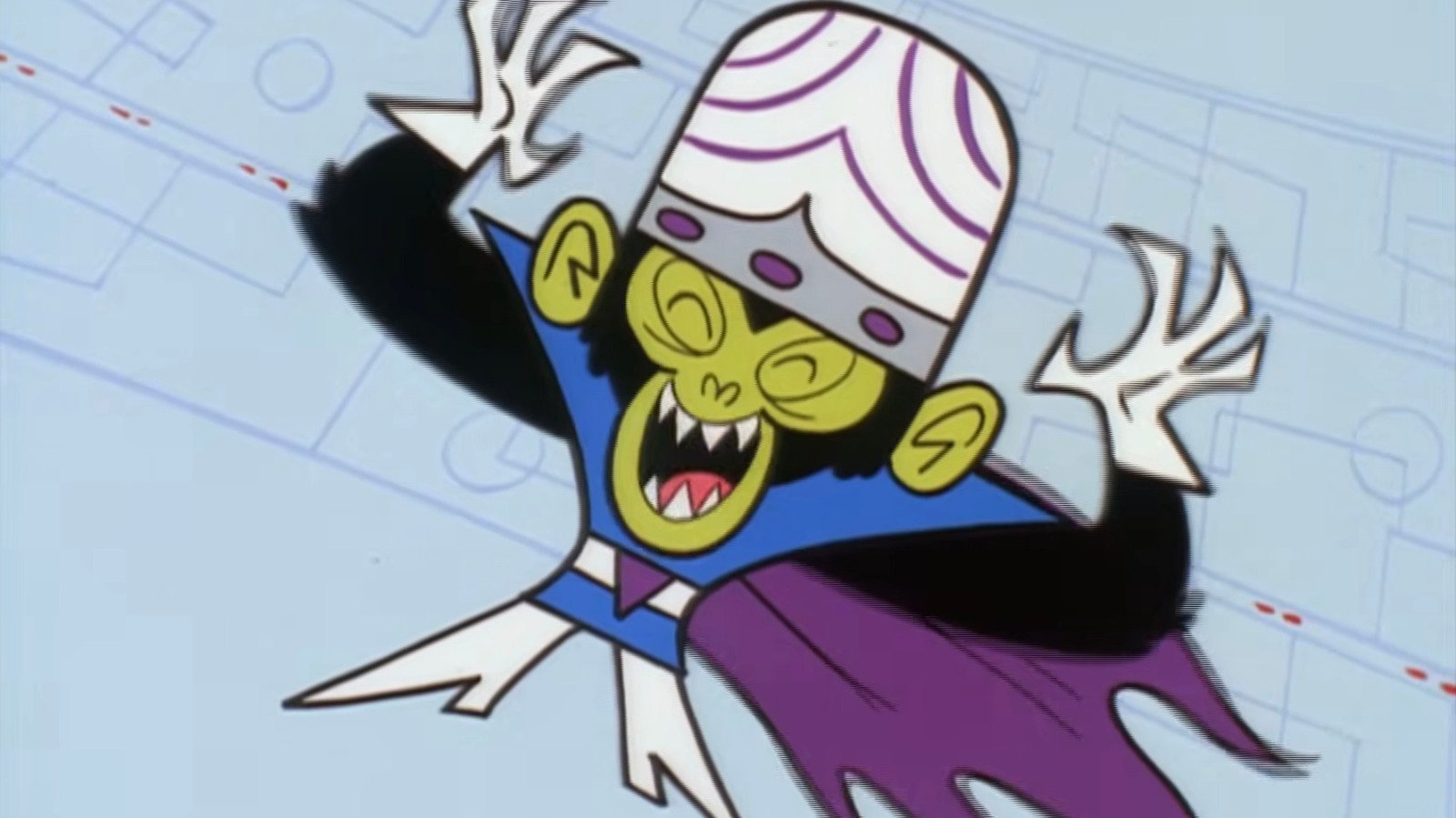
3. Mojo Jojo (The Powerpuff Girls)
The Powerpuff Girls defeated many villains while protecting the city of Townsville, and while HIM may have been the scariest and Princess Morebucks the most hateful, it’s hard to deny that Mojo Jojo was the best villain in the Cartoon Network series. The topic of many of the best episodes of “The Powerpuff Girls” Mojo was a super-intelligent chimpanzee with a giant brain and an even bigger ego. His tendency to boast redundantly about his greatness and the brilliance of his plans has led to his downfall more than once over the course of the series.
The actor behind Mojo, Roger L. Jackson, also played another iconic ’90s villain, providing the voice of “Scream’s” masked killer, Ghostface. While Ghostface may be a more well-known villain, Jackson said Mojo was the better character in an interview Daily time. “People are drawn to Ghostface, but they really love Mojo,” he explained. “I think part of that is that, no matter how smart he is, Mojo is a bit of a bumbling mess. He’s not really a good person, but you can’t help but feel sorry for him. Mojo can be portrayed as an idiot, and I think most people can relate to that.”
2. David Xanatos (Gargoyle)
A “Xanatos Gambit” is a plan that provides a contingency for every possible outcome so that, no matter what happens, the schemer comes out on top, even if, at first, it seems like they are losing. The namesake of this trope was David Xanatos, the villain of the A little forgotten Disney series “Gargoyles”. Voiced by “Star Trek: The Next Generation” star Jonathan FrakesXanatos is a calm but ruthless billionaire CEO, originally responsible for freeing the Gargoyles, and makes many efforts to regain control of them. Xanatos never lets his emotions get the better of him. There’s no need to take things personally or lose your temper when you have so many backup plans and contingencies that it’s impossible to fail in the long term.
“We didn’t want our villains to decay. We wanted Xanatos to be intelligent in a way that we hadn’t seen villains in the past,” said “Gargoyles” creator Greg Weisman. Polygon. “I didn’t want it to be mean, that was the main thing. I didn’t want it to be vindictive.” Xanatos eventually became an ally of the Gargoyles, putting his powers of calculation and foresight to good use, but his many stratagems have earned him a place in the villain hall of fame.
1. The Joker (Batman: The Animated Series)
Unlike the rest of the villains on this list, the Joker wasn’t created in the ’90s. The most iconic villain in Batman’s rogues gallery made his comic book debut in 1940. However, the version of the supervillain in the best superhero cartoon“Batman: The Animated Series” is one of the best takes on the character. This Joker is undeniably one of the greatest villains in the history of television, animated or otherwise.
While The Joker was originally supposed to be voiced by Tim Curry“Star Wars” actor Mark Hamill eventually landed the part, and in doing so, landed himself another iconic role in addition to Luke Skywalker. Unlike César Romero’s relatively silly version of the villain in the Adam West-led 1960s “Batman” show, the Joker in “Batman: TAS” is a real threat. Yet Hamill’s unbridled laughter and cunning make even the Clown Prince of Crime legitimately funny. The real magic of this version comes from how quickly and unpredictably it can go from hilarious to horrifying – and sometimes juggle the two at the same time.
“He’s crazy, and because he’s crazy, he’s never boring,” Hamill said Wired. “It’s just fun to play a character who creates chaos wherever he goes.” The “Star Wars” star’s performance helped make many the best episodes of the “Animated Series” so great, and reprized the role in other DC animated shows like “Justice League,” as well as the “Arkham” video game series.
About the Author


